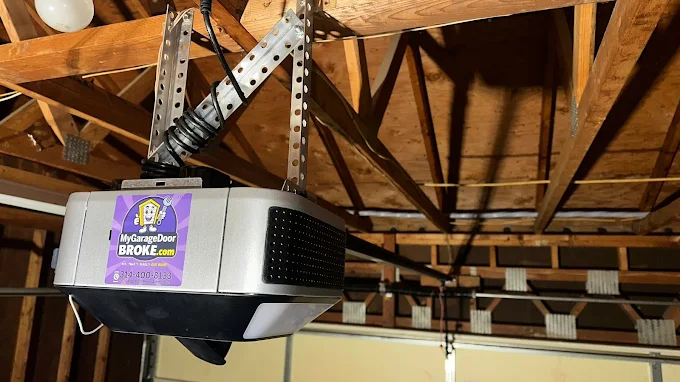
Your garage door opener worked fine yesterday. Now it doesn't. Before you panic or start searching for a replacement, take a breath. Many opener problems have simple fixes that don't require a service call.
This guide walks you through the most common garage door opener issues we see from homeowners across St. Louis, St. Charles, and Jefferson County. We'll start with the quick checks that solve most problems, then cover the specific symptoms and what causes them. And if you've tried everything and still can't get it working, we'll tell you exactly when it's time to call a professional.
Key Takeaway
Before you call for service, run through the 30-second quick checks below. You'd be surprised how often the fix is simple: check power, sensors, lock-out mode, and emergency release.
Quick Checks First (30-Second Fixes)
Before you do anything else, run through this quick diagnostic checklist. You'd be surprised how often the fix is one of these.
30-Second Quick Checks
If none of these solve the problem, keep reading. We'll dig into specific symptoms next.
Common Opener Problems and Solutions
Remote Control Won't Work
This is the most common complaint we hear, and the most common fix is the simplest: replace the batteries. Remote batteries typically last 1 to 2 years, and a weak battery causes intermittent issues before it dies completely.
If fresh batteries don't help, try standing closer to the opener and pressing the button again. If it works at close range but not from your car, the remote's signal may be weak or the antenna on the opener unit may be damaged.
Try the wall button inside the garage. If the wall button works but the remote doesn't, the problem is isolated to the remote itself. It may need to be reprogrammed. Consult your opener's manual for reprogramming steps, or call us at (314) 400-8133 and we can walk you through it.
If neither the wall button nor the remote works, the issue is with the opener unit or its electrical connection, not the remote.
Door Reverses Before Closing
Your door starts closing, then immediately reverses back up. This is one of the most frustrating opener issues, and it's almost always caused by the safety sensors.
Misaligned sensors are the most common culprit. The two photo-eye sensors at the bottom of your door opening must be pointed directly at each other. If one gets bumped even slightly, the beam breaks and the door reverses as a safety precaution. Check that both sensors have steady lights (typically green on the receiving side). Gently adjust until both lights are solid. Need help with sensor alignment?
Something blocking the beam is the next thing to check. A broom handle, a box, a shoe, or even a cobweb stretched across the sensors can interrupt the beam. Clear the area and clean the lenses.
Damaged or disconnected sensor wires require a closer look. Follow the thin wires from each sensor back toward the opener unit. Look for cuts, pinches, or disconnected leads at the opener terminal.
Sun glare is a sneaky one. In some garages, afternoon sunlight hits the receiving sensor directly and overwhelms it. If your door only reverses during certain times of day, sun glare is likely the cause. A simple cardboard shade or sensor relocation solves it.
If you've checked all of the above and the door still reverses, the close force setting may need adjustment. This is a professional-level calibration. Call us and we'll get it dialed in.
Opener Runs But Door Doesn't Move
You hear the motor running, but the door stays put. This has a few possible causes, and one of them is serious.
The emergency release was pulled. If that red cord was pulled (intentionally or accidentally), the door is disconnected from the opener trolley. To reengage, pull the cord back toward the opener, then cycle the opener with your remote. The trolley should reconnect on the next cycle.
A broken spring. This is the serious one. If a spring has broken, the opener motor simply can't lift the door on its own. Your door weighs 150 to 400+ pounds, and the springs do the heavy lifting. If you hear the motor straining or the door barely budges, stop immediately. Do not try to force it. A broken spring requires professional replacement. Learn more about broken springs.
Safety Warning
If you suspect a broken spring, stop immediately. Do not try to force the door. Without spring support, the full weight of the door (150-400+ pounds) is unsupported. Forcing it can cause injury, damage the opener, or bend the tracks. Call for same-day spring replacement.
A stripped gear inside the opener. This is common on older chain-drive models. You'll hear a grinding or clicking sound from the motor unit, but the chain or belt doesn't move. The main drive gear has worn out and needs replacement.
A broken chain or belt. Less common, but possible. If the chain or belt has snapped, the motor runs freely without connecting to the trolley.
Door Opens By Itself
Your garage door opens without anyone pressing a button. This is unsettling, but it usually has a straightforward explanation.
Frequency interference is common with older openers that use fixed-code technology. A neighbor's remote, a nearby radio frequency, or even certain electronics can trigger your door. This is a significant security concern.
A stuck wall button can send continuous or intermittent open signals. Check if the button feels stuck or if the wiring behind it has a short.
Wiring shorts anywhere in the system can trigger false open signals. Frayed wires, moisture, or rodent damage to wiring are all possible culprits.
If you have a LiftMaster with Security+ 2.0 or 3.0 technology, this problem shouldn't occur. These systems use rolling code encryption that changes the access code with every use, making frequency interference and code theft virtually impossible. If your opener lacks this technology and you're experiencing phantom opens, upgrading to a modern LiftMaster eliminates the issue entirely.
Still Having Opener Issues?
If the quick fixes didn't solve it, we're here to help. Free diagnosis for qualifying ZIP codes near Chesterfield. Outside qualifying ZIPs, diagnostic fee starts at $89 and is credited 100% toward repair same day.
Call (314) 400-8133 or learn more about our opener repair service.
Qualifying ZIP codes: 63005, 63017, 63011, 63021, 63038, 63040, 63088, 63131, 63141, 63122, 63124. $89 within 15 miles. $129 for 15–30 miles.
Opener Makes Grinding or Clicking Noise
A grinding or clicking noise from the opener unit usually means an internal component is failing.
A stripped drive gear is the most likely cause, especially on chain-drive openers. The nylon or plastic main gear wears down over time and eventually can't grip the worm drive. You'll hear grinding, but the chain won't move (or moves intermittently).
A failing motor capacitor can cause the motor to hum, buzz, or click without fully engaging. The capacitor provides the initial burst of power to start the motor, and when it weakens, the motor struggles to turn over.
Travel limit or chain/belt tension issues can also create unusual noises. If the opener runs past its programmed travel limits, it may grind against the stop mechanism. Loose chain or belt tension causes slapping or clicking sounds during operation.
Age is a factor. If your opener is 15+ years old and making new noises, it may be nearing end of life. Opener motors, gears, and circuit boards all have finite lifespans.
Age Factor
Opener motors, gears, and circuit boards all have finite lifespans. If your opener is approaching 15+ years and experiencing multiple issues, replacement is usually the smarter long-term investment over repeated repairs.
Door Opens Partway Then Stops
The door lifts a few feet, then stops and may reverse back down. This is a symptom with several possible causes.
A broken spring is the most common reason. With one spring out of commission, the opener can partially lift the door but doesn't have enough assistance to complete the full travel. The safety system kicks in and stops the motor. Do not keep cycling the opener if you suspect a spring issue. You'll burn out the motor. Learn about spring replacement.
Travel limit settings may need adjustment if the opener is newer or was recently serviced. The limits tell the opener how far to travel in the open and close directions.
Track obstructions or binding from a bent track section, debris, or a damaged roller can create enough resistance to trigger the safety stop. Inspect the tracks visually for anything that might be catching.
Keypad Won't Work
Outdoor keypads are convenient, but they have their own set of common issues.
Dead battery is the most frequent cause. Outdoor keypads run on battery power, and extreme temperatures (both hot and cold) shorten battery life. St. Louis summers and winters are tough on keypad batteries. Replace them annually as a preventive measure.
Code needs reprogramming. If the battery was dead for an extended period, the keypad may need to be reprogrammed with a new access code. Follow your opener manual for the reprogramming procedure.
Temporary PIN expiration. If you set a temporary access code (for a contractor, pet sitter, or guest), check whether it has expired.
When to Call a Professional
DIY troubleshooting is great for simple fixes, but some problems require professional tools, training, and experience. Here's when to pick up the phone.
Call a Professional When...
- You suspect a broken spring — never force a door against a broken spring
- Burning smell from the motor — motor overheating, stop immediately
- Visible damage to gears, logic board, or motor — internal failure needs pro diagnosis
- Sensor issues persist after realignment — sensors may be faulty or wiring issue
- Opener is 15+ years old with multiple issues — replacement often saves money long-term
- You've tried everything and it still won't work — that's what we're here for
- Anything involving springs or cables — dangerous, requires trained technician
Repair or Replace? How to Decide
Not every opener problem means you need a new unit. Here's a quick framework to help you decide.
Repair Makes Sense When...
We carry LiftMaster repair parts on every truck — gears, logic boards, sensors. Most straightforward fixes are done in a single visit. Learn more about opener repair.
Replacement Makes Sense When...
We service all opener brands. For repairs on non-LiftMaster units, we carry common parts and can fix most issues. However, when a major component fails on an older non-LiftMaster opener (like a logic board or gear assembly), full replacement with a new LiftMaster is often more cost-effective than sourcing hard-to-find parts. Learn more about new opener installation.
Why We Recommend LiftMaster
When replacement does make sense, we install LiftMaster exclusively. Here's why.
As a certified LiftMaster dealer, we've completed official factory training on every model in the lineup. LiftMaster is the number one professional-grade opener brand, and it's earned that reputation through decades of reliable performance.
Security+ 2.0 and 3.0 rolling code technology changes your access code with every use, eliminating frequency interference and code theft. No more phantom door openings. No more worrying about signal hacking.
myQ smart home integration lets you monitor and control your garage door from your phone. Get alerts when the door opens. Close it remotely if you forgot. Set schedules. View camera feeds on camera-equipped models. We set up myQ completely during installation, including Wi-Fi connection, app configuration, camera setup, and a full controls walkthrough.
Battery backup keeps your door operational during power outages. St. Louis gets its share of severe storms, and a battery backup means you're never stuck waiting for the power to come back.
We stock Basic, Plus, and Premium series LiftMaster openers on every truck, along with wall-mount (jackshaft) models for garages with car lifts or low ceilings. That means same-day installation is often available. A typical install takes 2 to 3 hours, and you'll be up and running with full smart home integration before we leave.
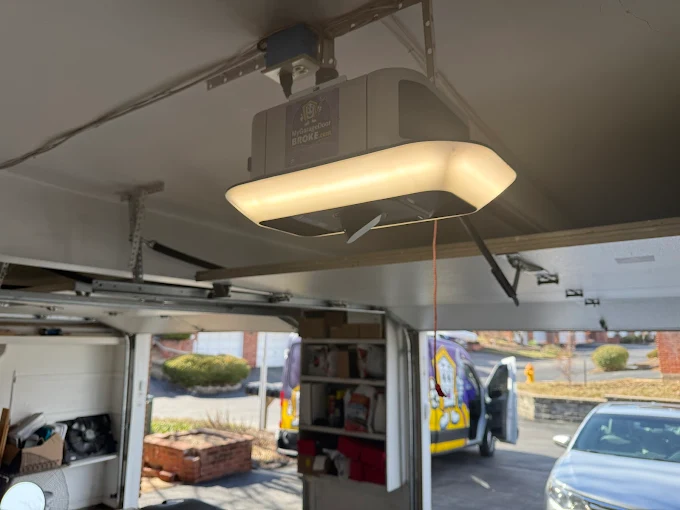
Learn more about LiftMaster openers.
FAQ: Opener Troubleshooting
Frequently Asked Questions
The most common causes are frequency interference (on older openers with fixed codes), a stuck wall button, or a wiring short somewhere in the system. If this is happening to you, it's both a convenience issue and a security concern. Upgrading to a LiftMaster with Security+ rolling code technology eliminates frequency interference permanently. <a href="tel:+13144008133">(314) 400-8133</a> — call and we can diagnose the exact cause.
Yes. We diagnose and repair all opener brands. We carry common repair parts (gears, logic boards, sensors) for major brands on our trucks. However, when a major component fails on an older non-LiftMaster unit, replacement with a new LiftMaster is often more cost-effective than sourcing discontinued parts. We'll give you an honest recommendation based on your specific situation.
Most openers last 10 to 15 years with proper maintenance. Some last longer, especially if they're not overworked and receive annual tune-ups. If your opener is approaching the 15-year mark and starting to show issues, replacement is usually the smarter long-term investment.
If the opener is under 10 years old and it's a single, straightforward fix, repair is almost always the right call. If the opener is 15+ years old and experiencing multiple issues, replacement saves money in the long run and gives you modern safety and smart home features you're currently missing.
Often, yes. We carry 2 to 3 units of each LiftMaster series (Basic, Plus, Premium, and wall-mount) on every service truck. If we're diagnosing an opener issue and determine that replacement is the better option, we can frequently install the same day. <a href="tel:+13144008133">(314) 400-8133</a> — call to check availability.
Chain-drive openers are the more affordable option. They're reliable and proven, but they're louder during operation. Belt-drive openers use a rubber belt instead of a metal chain, making them significantly quieter and smoother. We strongly recommend belt-drive for any attached garage where noise travels into your living spaces. Both types are available in our LiftMaster lineup.
Still Stuck? That's What We're Here For.
If you've worked through the troubleshooting steps above and your opener still isn't cooperating, give us a call. We offer a free diagnosis for residents in qualifying ZIP codes near Chesterfield,* and we carry the parts and openers needed to fix most problems in a single visit. Same-day service available.
Serving St. Louis, St. Charles, and Jefferson County. Family-owned. Licensed and insured.
*Qualifying ZIP codes: 63005, 63017, 63011, 63021, 63038, 63040, 63088, 63131, 63141, 63122, 63124. $89 diagnostic fee within 15 miles (credited 100% toward repair same day). $129 for 15–30 miles (credited 100% toward repair same day).
Related resources:
Need Help Choosing?
Our team can walk you through the options and help you find the right garage door for your home and budget.